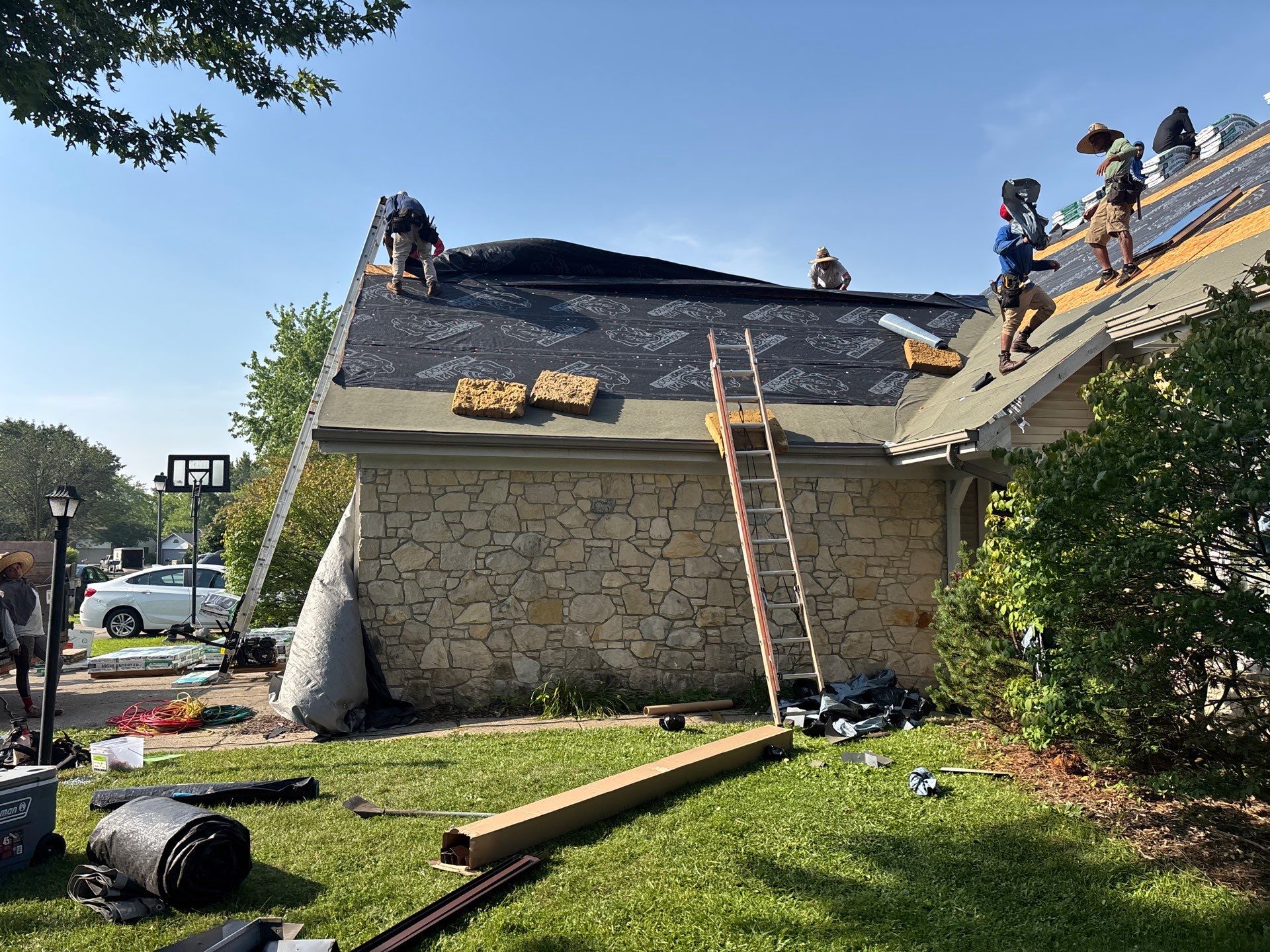
How to Decide Whether to Replace the Roof Before Selling
Deciding whether to put on a new roof before listing is a real financial call, and it goes better when you work through it in order rather than guessing. For a Stones Crossing homeowner, the decision rests on the roof's current condition, your local market, the concessions you would likely face without a new roof, and the indirect benefits a sound roof brings. The return is partly the resale recoup and largely the smoother sale, so the right answer balances both. Here is a step-by-step way to reach a decision that fits your home and situation.
Assess the Roof's Current Condition
Start with facts about the roof. A professional inspection tells you the roof's true condition and remaining life, which is the single most important input. A roof at the end of its life points strongly toward replacing or addressing it, while a roof with years left changes the calculation entirely. Do not rely on a glance from the ground or on the buyer's inspector alone, since the depth of a roofer's assessment is what reveals whether you are facing a full replacement, a targeted repair, or simply an older but sound roof. This assessment anchors every step that follows.
Factor In Your Local Market
The market shapes how much the roof matters. In a competitive area where buyers expect move-in-ready homes, a new roof carries more weight and a failing one is a bigger liability. In a slower market, a sound roof can be the difference between selling and sitting. Look at what comparable Stones Crossing homes offer and what buyers in your area expect, since a roof that would be a minor issue in one market can be a deal-breaker in another. Matching your decision to the local market keeps you from over- or under-investing relative to what buyers there actually value.
Make the Call That Fits Your Situation
Finally, decide based on everything you have gathered. There is no universal answer, since the right move depends on the roof's condition, your market, the concessions at stake, and the indirect benefits. A failing roof in a competitive, insurance-tight market usually justifies replacement, while a sound older roof in a forgiving market may not. The goal is a decision that fits your specific home and circumstances rather than a rule of thumb. With a roofer's assessment and a clear view of the tradeoffs, a Stones Crossing seller can make that call with confidence and move forward with the sale.
Think About Insurability for the Buyer
Consider whether the roof could create an insurance problem for the buyer. Insurers have grown stricter about roof age and condition, and a roof that cannot be insured can prevent a buyer from getting the coverage their lender requires, stalling or sinking the sale. If the roof is old enough that insurability is in question, that pushes the decision toward replacing it, since the alternative is risking the deal late in the process. A Stones Crossing roofer can tell you whether the roof's age and condition are likely to trigger this, which is increasingly worth checking before you list.
Weigh Replace vs Credit vs As-Is
Next, compare your options. Replacing the roof yourself controls cost and quality, markets the home better, and avoids buyers overestimating the repair. Offering a credit is simpler and lets the buyer choose, but can invite an inflated request. Selling as is with disclosure and pricing may suit a roof that still has life. The right path depends on the roof's condition and your market. For a failing roof in a competitive Stones Crossing market, replacing often wins, while a disclosed credit or repair may fit a roof with remaining life. Compare the real costs of each before choosing.
Consider Whether It Is Needed or Premature
With the condition known, judge whether a replacement is genuinely needed. This matters more than almost anything else for the return. Replacing a roof that is failing recoups well, because buyers would otherwise demand a credit or price cut for that work. Replacing a roof with life left returns little, since buyers will not pay a premium for a premature replacement. So if the inspection shows the roof is due, replacing it is far easier to justify than if the roof still has years of service. Being honest about this with yourself keeps you from spending on a replacement that will not pay off.
Get a Professional Inspection and Estimate
Ground the whole decision in expert input. A roofer's inspection confirms the roof's condition and remaining life, identifies whether a repair or replacement is appropriate, and provides accurate cost figures, which also arm you to counter inflated buyer credit requests. This turns a decision full of unknowns into one based on facts. Whether the answer is to replace, repair, credit, or disclose, the inspection is what makes it a confident choice rather than a guess. Stones Crossing Roofing provides that assessment for Stones Crossing homeowners preparing to sell, so the roof becomes a managed part of the plan.
Account for Curb Appeal and First Impressions
Factor in how the roof affects the home's appearance. As a large visible surface, the roof shapes the first impression in listing photos and at showings, and a worn roof can cast doubt over the whole home. If your roof looks aged and competing listings show move-in-ready homes, the visual lift of a new roof supports the home's appeal and perceived value. This is a softer factor than condition or insurability, but it is real, especially in a market where buyers form quick judgments online. Weigh how much the roof's appearance is helping or hurting your home's presentation.
Run the Numbers on Recoup
Put rough numbers to it. Expect a new roof to return a majority of its cost directly in the price, often around sixty percent or so for asphalt by industry estimates, plus the harder-to-quantify indirect value. Compare that against the concessions you would likely give selling with an old roof, which buyers often pad beyond the real cost. If the gap between replacing and conceding is small or favorable, replacing makes sense. If the roof has life left and concessions would be minor, leaving it may be wiser. For a Stones Crossing seller, this comparison clarifies the financial side of the call.
Time the Work and Keep the Paperwork
Once you have decided, two final steps protect the value of your choice. First, timing: if you are replacing the roof, start early so the work finishes before buyers see the home, since roofing carries lead time and a last-minute job can delay your listing. Replacing first also lets you photograph the home with the new roof. Second, documentation: keep the invoice, warranty, and any transferable coverage if you replaced the roof, or a roofer's written assessment and estimate if you are crediting or disclosing. For a Stones Crossing seller, handling timing and paperwork well is what turns a sound roof decision into a smooth, transparent transaction that buyers trust. A new roof's appeal to buyers and the confidence it provides can support the home's value at sale for your situation.